Replace paper and patchwork with software built around how you work.
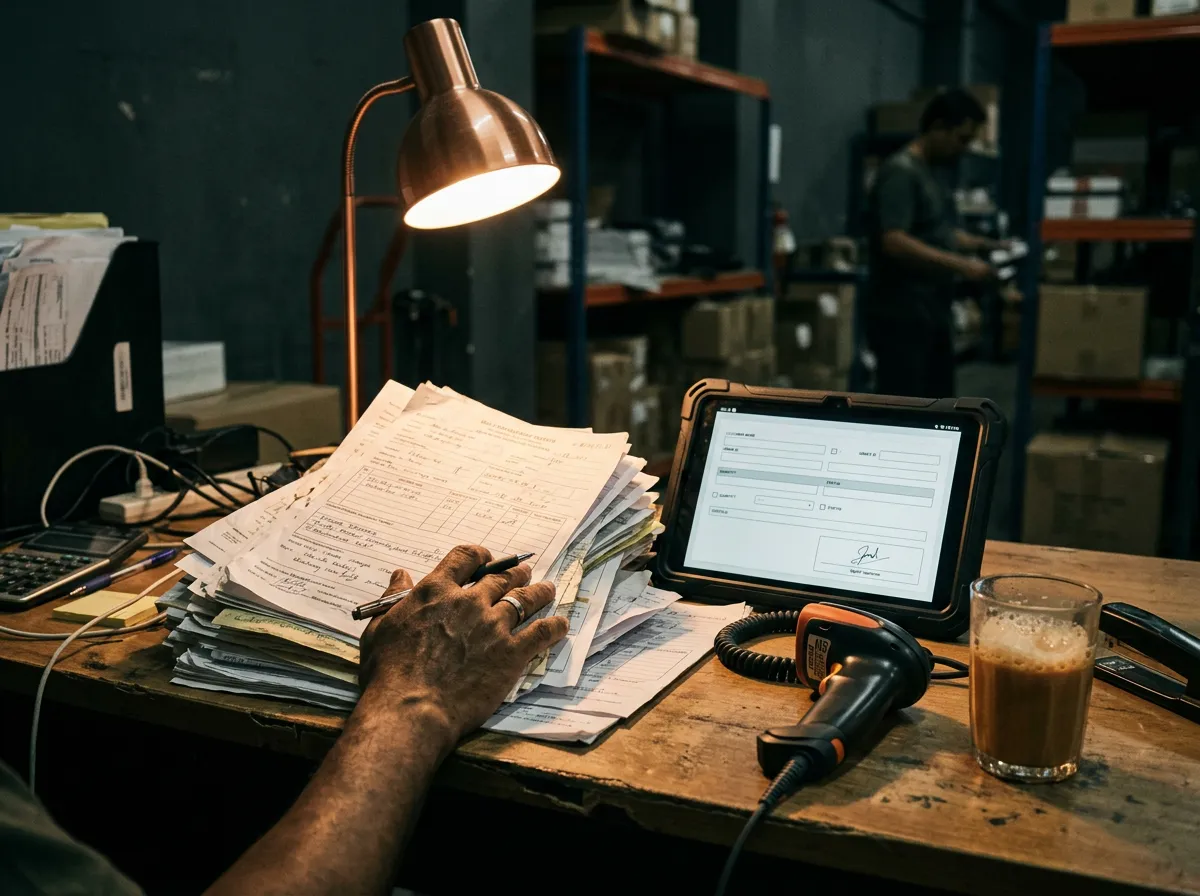
Most teams don't need another off-the-shelf platform. They need the forms, approvals and records they already use to work properly on a screen, and to connect to the systems they already pay for.
Paper-based, manual processes
The same data gets entered again and again, and every copy is a chance for a mistake.
Siloed systems
Each team keeps its own records, so nobody has the full picture.
Hard to scale
Workarounds that held a small operation together collapse as sites, lines and headcount grow.
Internal tools, portals and ERP add-ons shaped around your process instead of forcing your process into a template.
iOS and Android apps for field teams, shop floors and customers, including offline use where the signal drops.
Invoices, delivery orders and handwritten forms read into structured data, with a person checking anything the system isn't sure about.
Connections to the accounting, ERP and marketplace systems you already run, so data is entered once and shows up everywhere.
A typical system, from where the data starts to where someone acts on it.
A typical first step: Map one paper-heavy process end to end, then build a working version your team can try.
Learn Manufacturing
Learn Healthcare
Learn Education
Learn F&B
Learn Retail
Usually, yes. We start by looking at what you run today and connect to it where we can, through its API, database exports or file drops, before suggesting anything new.
Ownership, licensing and hosting are set out in the proposal before any work starts, so there are no surprises later.
That's the point. We test early versions with the people who will use them every day and change what confuses them.